
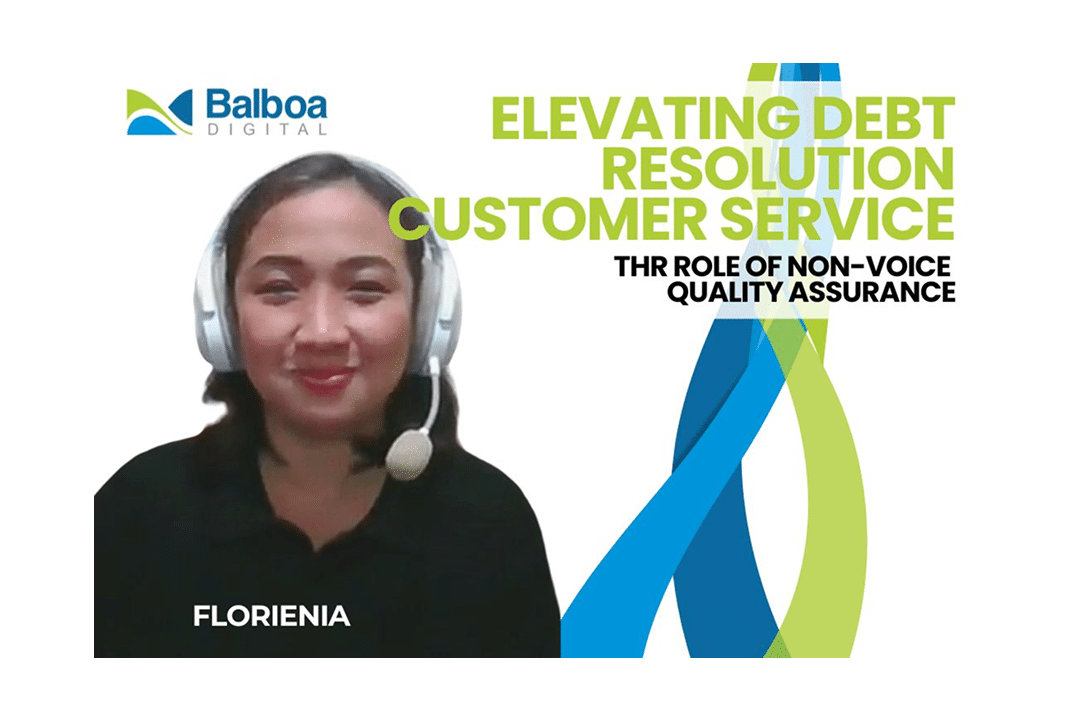
In today’s fast-paced digital world, non-voice processes have become a cornerstone of customer service operations. From email support to live chat and social media management, these channels offer efficient and cost-effective ways to engage with customers. However, ensuring the quality of these interactions is crucial for maintaining customer satisfaction and loyalty. Recently, we had the opportunity to sit down with Florienia Hill, a Quality Assurance (QA) agent at Balboa Digital, to discuss the best practices and challenges in non-voice quality assurance.
The Importance of Non-Voice Quality Assurance
Non-voice quality assurance (QA) involves monitoring and evaluating the performance of customer service agents who handle written communications. This includes emails, live chats, and social media interactions. Florienia Hill noted, “Non-voice channels are just as important as voice channels. They require the same level of attention to detail and quality control to ensure a seamless customer experience.”
Key Challenges in Non-Voice QA
One of the primary challenges in non-voice QA is the lack of real-time feedback. Unlike voice interactions, where supervisors can listen in and provide immediate guidance, non-voice interactions often require post-interaction review. “It’s essential to have a robust QA process in place to catch any issues that may arise,” explained Florienia. “This includes regular audits, performance metrics, and continuous training for agents.”
Best Practices for Non-Voice QA
To overcome these challenges, Florienia shared several best practices for effective non-voice QA:
- Implement Comprehensive QA Metrics: “We use a variety of metrics to evaluate non-voice interactions, including response time, accuracy, and customer satisfaction scores,” said Florienia. These metrics help identify areas for improvement and ensure that agents are meeting performance standards.
- Leverage Technology and Automation: Automation tools can streamline the QA process by flagging potential issues and providing real-time feedback to agents. “Technology plays a crucial role in non-voice QA. Automated systems can quickly analyze large volumes of data and highlight areas that need attention,” noted Florienia.
- Continuous Training and Development: Regular training sessions help agents stay updated on best practices and new technologies. “Investing in continuous training is key to maintaining high-quality non-voice interactions,” emphasized Florienia. “It’s important to provide agents with the resources they need to succeed.”
- Foster a Culture of Quality: Encouraging a culture of quality within the organization ensures that all team members are committed to delivering exceptional customer service. “Quality should be a core value that everyone in the organization strives for,” said Florienia.
Real-World Applications
Florienia’s role involves reviewing settlement accounts submitted by the negotiations team to ensure they comply with quality review standards. “As a quality assurance agent for debt settlements, my role involves reviewing settlement accounts submitted by the negotiations team to ensure that they comply with the quality review standards,” she explained. This includes assigning accounts, reviewing details against QRS guidelines, finalizing compliant accounts, and rejecting those with errors.
Florienia highlighted the critical role QA plays in the debt settlement workflow by acting as a safeguard against compliance issues, financial discrepancies, and processing errors. “Ensuring settlements are properly documented and aligned with company standards helps maintain the client’s trust, prevents legal issues, and supports smooth fund disbursement,” she said.
Types of Accounts and Verification Process
Florienia detailed the three main types of accounts handled daily: standard accounts, attorney model clients, and loan accounts. Key details verified include the presence of settlement letters, required signatures, matching settlement details with client records, proper authorization, and correct payment processing details.
Reviewing accounts under a legal creditor adds complexity due to additional stipulations and confirmation requirements. “Legal creditors often impose specific terms beyond the standard settlement agreements, which introduce several layers of verification and compliance checks,” Florienia explained. This includes ensuring that agreed settlement amounts match the client’s records and factoring in any interest charges or additional fees.
Common Errors and Solutions
Florienia identified common errors encountered in submitted accounts, such as mismatched payment breakdowns, typos on payment dates, missing upper management approval, and incorrect payment methods. “With these errors, we reject the account with a note of the error and then send back to the negotiations team to correct the discrepancy or update what’s needed for the account,” she said.
Red Flags and Further Review
Florienia also highlighted several red flags that indicate an account may need further review or rejection. These include discrepancies in the settlement amount or payment breakdown, conflicts in payment methods without proper UMA authorization, active drafts, insufficient funds, and client status issues such as cancellations. “For scheduled drafts or active drafts, we check the client files for a recording confirming the client’s agreement to the settlement,” she explained. If discrepancies are found, the account is rejected for correction.
Global Authorization and UMA
Global Authorization (GA) is required for resettled accounts, lost settlements, or when the negotiator marks yes for the global auth review. “GA can be obtained via email or recording and must confirm the creditor’s settlement terms with a payment breakdown,” Florienia noted. Similarly, UMA (Upper Management Approval) is checked for discrepancies related to fees, SIF percentage, negative balance, and payment method exceptions.

Finalizing Accounts
Before finalizing an account, several key criteria are checked, including settlement terms, payment methods, active drafts, duplicate drafts, global authorization, UMA, and payment schedules. “If the account does not meet approval criteria, we reject the account and provide detailed rejection notes specifying the exact issue and any corrections needed,” Florienia explained.
Tools and Metrics
Florienia mentioned the use of QuickBase and AdvantagePoint to track and manage accounts. “QuickBase provides detailed creditor profiles and payment preferences, while AdvantagePoint is used for reviewing payment schedules,” she said. Key performance metrics include attendance, teamwork, quality, and productivity, with a target of processing five accounts per hour.
Compliance Risks and Mitigation
Florienia identified common compliance risks in QA, such as approving special drafts without client authorization, finalizing accounts requiring global authorization when GA details don’t match settlement letter terms, and finalizing accounts requiring UMA without proper documentation. “To mitigate these risks, we ensure every special draft, global auth, or UMA is supported by a recording or email confirmation from the client or creditor,” she explained. Staying updated on QA policies and compliance updates through Teams channels and training materials is crucial.
Impact on Client Satisfaction and Company Profitability
Ensuring settlement accounts are accurate and compliant before finalization prevents payment delays, reduces rework, and increases successful settlement rates. “Accurate settlements increase creditor trust and reduce payment rejections, leading to higher settlement success rates,” Florienia noted. This improves client retention, encourages referrals, reduces cost per enrollment, and increases profitability for the company.
Continuous Learning and Adaptability
Florienia emphasized the importance of constant learning and adaptability due to frequently changing creditor policies and compliance rules. “Team communication is crucial to maintain accuracy and compliance,” she said. Florienia enjoys the non-voice role, which allows her to focus on details without the pressure of real-time interaction and appreciates the supportive environment created by the management team.
At Balboa Digital, we have successfully implemented these best practices to enhance our non-voice QA processes. By leveraging advanced technology and focusing on continuous improvement, we have been able to deliver outstanding customer service across all non-voice channels.
For more information on non-voice quality assurance, check out these resources:


